
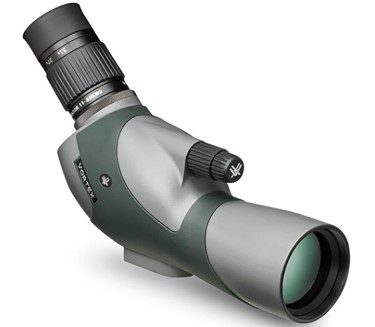
When it comes to precision shooting at 300 yards, having the right spotting scope can mean the difference between a successful session and frustrating guesswork about your shot placement. At this intermediate distance, you’re dealing with a unique set of challenges that require careful consideration of optical specifications, magnification requirements, and practical field use factors. Unlike longer ranges where maximum magnification is paramount, 300-yard work demands a balance of clarity, field of view, and versatility that makes spotting scope selection more nuanced than many shooters realize.
The 300-yard distance represents a sweet spot in precision shooting where bullet holes are still reasonably visible with moderate magnification, but atmospheric conditions begin to play a more significant role in image quality. At this range, you’re typically dealing with bullet holes that appear roughly 1-2 MOA in angular size through your spotting scope, making them clearly visible with quality optics but requiring enough magnification to assess shot groups accurately. This distance is particularly popular among competitive shooters, hunters sighting in rifles, and recreational precision enthusiasts who want to develop their long-range skills without the extreme equipment demands of 600+ yard shooting.
What makes 300-yard spotting particularly interesting is the balance between optical power and atmospheric interference. Unlike closer ranges where basic optics suffice, 300 yards requires spotting scopes capable of cutting through heat mirage, humidity, and atmospheric disturbance while still providing enough magnification to clearly resolve bullet impacts. The best spotting scopes for this distance feature high-quality glass that minimizes chromatic aberration, excellent coatings that maximize light transmission, and magnification ranges that provide both wide field of view for target acquisition and sufficient power for detailed shot analysis.
Professional precision shooters understand that spotting scope selection for 300 yards involves more than just magnification numbers. Factors like objective lens diameter, optical design quality, mechanical construction, and ease of use become critical when you’re trying to maintain focus through atmospheric disturbance while providing rapid feedback during practice sessions or competitions. The right spotting scope becomes an extension of your shooting system, providing the immediate feedback necessary to make corrections and improve performance.
Our Top Spotting Scope Recommendations for 300-Yard Use
We’ve carefully evaluated these spotting scopes based on their optical performance at 300 yards, build quality, practical features, and overall value for intermediate-distance precision work.
1) Vortex Razor HD 11-33×50 (Best Overall Performance)
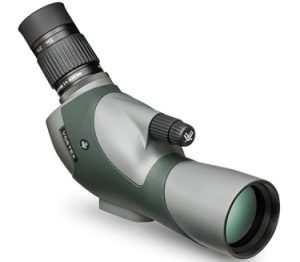
The Vortex Razor HD 11-33×50 represents the pinnacle of compact spotting scope design, delivering exceptional optical performance that excels at 300-yard applications. What sets this spotting scope apart is its perfect balance of portability and optical excellence, making it ideal for shooters who need premium performance without the bulk of larger spotting scopes. The 11-33x magnification range is practically perfect for 300-yard work, providing enough low-end magnification for quick target acquisition and sufficient high-end power for detailed bullet hole analysis.
The optical system in the Razor HD is simply outstanding for its size class. Vortex utilizes HD (High Density) extra-low dispersion glass elements combined with premium multi-coatings to deliver exceptional color fidelity and contrast. At 300 yards, this translates to crisp, clear images of bullet holes even in challenging atmospheric conditions. The 50mm objective lens provides excellent light-gathering capability while maintaining a compact profile that doesn’t overwhelm your shooting setup.
One of the most impressive aspects of the Razor HD is its close focus capability. The ability to focus down to just 18 feet makes this scope incredibly versatile, allowing you to examine equipment, check targets up close, or even use it for general observation. This feature is particularly valuable when you’re setting up targets or need to inspect your shooting position without changing equipment.
The build quality reflects Vortex’s commitment to professional-grade optics. The magnesium alloy body is both lightweight and incredibly durable, while the nitrogen purging and O-ring sealing provide complete waterproof and fog-proof performance. The smooth dual-focus system – featuring both coarse and fine focus controls – allows for precise image adjustment that’s critical when trying to resolve small details at 300 yards.
At 300 yards, the Razor HD’s performance really shines during those critical moments when atmospheric conditions challenge lesser optics. Heat mirage, humidity, and air movement that would render budget spotting scopes nearly useless are handled with ease by the Razor HD’s superior optical design. The result is consistently clear, high-contrast images that allow for accurate shot placement assessment and rapid shooting feedback.
Key Features
| Feature | Specification |
|---|---|
| Magnification | 11-33x |
| Objective Lens | 50mm |
| Field of View | 134-63 feet at 1000 yards |
| Close Focus | 18 feet |
| Eye Relief | 18-15mm |
| Weight | 27.2 oz |
| Length | 11.2 inches |
| Body Material | Magnesium alloy |
Pros
- Exceptional optical clarity and color fidelity
- Perfect magnification range for 300-yard work
- Compact and lightweight design
- Superior build quality with lifetime warranty
- Excellent close focus capability
- Outstanding performance in atmospheric conditions
Cons
- Higher price point than entry-level options
The Vortex Razor HD 11-33×50 represents the ideal spotting scope for serious 300-yard shooting. Its combination of optical excellence, practical magnification range, and robust construction make it our top choice for shooters who demand professional performance in a portable package. Whether you’re working on precision rifle skills, competing in matches, or developing loads, this spotting scope provides the clarity and reliability necessary for accurate shot assessment.
Check Price on Amazon2) Leupold SX-2 Alpine HD 20-60×80 (Best for Extended Sessions)
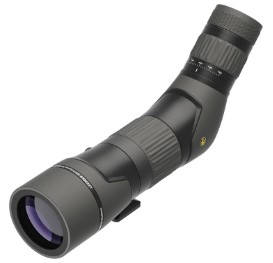
The Leupold SX-2 Alpine HD 20-60×80 represents traditional American spotting scope engineering at its finest, delivering the large objective lens performance that serious precision shooters have relied upon for decades. While it may be larger and heavier than compact alternatives, this spotting scope provides unmatched image brightness and detail resolution that becomes particularly valuable during extended 300-yard shooting sessions where eye fatigue can significantly impact performance.
The 80mm objective lens is where this spotting scope really demonstrates its advantage. The large front element gathers significantly more light than smaller spotting scopes, resulting in brighter, more detailed images that remain clear even as atmospheric conditions deteriorate. At 300 yards, this translates to better bullet hole visibility in challenging lighting conditions and superior performance during early morning or late evening shooting sessions when many precision shooters prefer to work.
Leupold’s HD (High Definition) glass system utilizes calcium fluorite elements and advanced coatings to deliver exceptional color accuracy and contrast. What this means in practical terms is that bullet holes appear sharper and more defined against target backgrounds, making shot placement assessment faster and more accurate. The superior contrast also helps cut through atmospheric disturbance that can obscure details in lesser spotting scopes.
The 20-60x magnification range provides excellent versatility for 300-yard applications. The 20x low end offers a wide field of view that makes target acquisition and general observation comfortable, while the 60x high end provides enough magnification for detailed analysis of shot groups and individual bullet hole placement. This range is particularly well-suited to load development work where you need to assess group sizes accurately.
One often-overlooked advantage of the Alpine HD is its mechanical construction quality. The dual-focus system provides smooth, precise focusing that remains consistent even after years of heavy use. The robust internal mechanisms are designed to handle the inevitable bumps and impacts that occur during field use, ensuring that your investment continues to perform reliably season after season.
Key Features
| Feature | Specification |
|---|---|
| Magnification | 20-60x |
| Objective Lens | 80mm |
| Field of View | 105-56 feet at 1000 yards |
| Close Focus | 23 feet |
| Eye Relief | 17-14mm |
| Weight | 64 oz |
| Length | 15.1 inches |
| Body Material | Aluminum alloy |
Pros
- Large objective provides excellent light gathering
- Superior image brightness and detail resolution
- Proven Leupold reliability and warranty
- Excellent performance in poor lighting conditions
- Robust mechanical construction
- Wide magnification range for versatility
Cons
- Significantly heavier than compact alternatives
The Leupold SX-2 Alpine HD 20-60×80 excels for shooters who prioritize optical performance over portability. Its large objective lens and premium glass system deliver uncompromising image quality that makes it particularly valuable for extended 300-yard shooting sessions, load development work, and precision training where maximum clarity is essential. While it requires a more substantial support system, the optical advantages make it worthwhile for serious precision shooters.
Check Price on Amazon3) Athlon Cronus 15-45×65 (Best Value Premium Option)
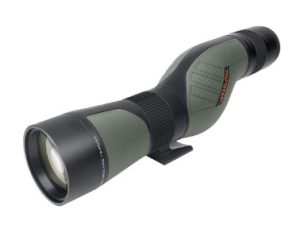
The Athlon Cronus 15-45×65 represents exceptional value in the premium spotting scope category, delivering optical performance that rivals much more expensive European alternatives while maintaining pricing that’s accessible to serious recreational shooters. Athlon has made a name for itself by offering features and glass quality typically found in scopes costing significantly more, and the Cronus exemplifies this philosophy perfectly.
The optical system in the Cronus utilizes ED (Extra-low Dispersion) glass elements combined with advanced multi-layer coatings to deliver impressive color accuracy and contrast. At 300 yards, this translates to clear, sharp images with minimal chromatic aberration – the color fringing that can make bullet hole assessment difficult with lesser optics. The 65mm objective lens strikes an excellent balance between light-gathering capability and overall portability.
What sets the Cronus apart from similarly priced competition is its attention to mechanical details that matter in field use. The dual-focus system features both coarse and fine focusing controls, allowing for precise image adjustment that’s critical when trying to resolve fine details at distance. The focus mechanism operates smoothly throughout its range and maintains its setting even when the spotting scope is moved or repositioned.
The 15-45x magnification range is practically ideal for 300-yard applications. The 15x low end provides a comfortable field of view for target location and general observation, while the 45x high end offers sufficient magnification for detailed shot analysis without pushing into the atmospheric disturbance issues that can plague higher magnifications. This range covers the sweet spot for intermediate-distance precision work.
Build quality reflects Athlon’s commitment to providing professional-grade features at competitive pricing. The spotting scope is fully waterproof and fog-proof thanks to nitrogen purging and precision O-ring sealing. The magnesium alloy body provides excellent durability while keeping weight reasonable for a spotting scope in this objective lens class.
Key Features
| Feature | Specification |
|---|---|
| Magnification | 15-45x |
| Objective Lens | 65mm |
| Field of View | 126-70 feet at 1000 yards |
| Close Focus | 19.7 feet |
| Eye Relief | 18-15mm |
| Weight | 46.7 oz |
| Length | 13.4 inches |
| Body Material | Magnesium alloy |
Pros
- Excellent optical quality for the price point
- ED glass minimizes chromatic aberration
- Practical magnification range for 300-yard work
- Robust construction with full weatherproofing
- Smooth dual-focus system
- Outstanding value proposition
Cons
- Brand recognition still building in marketplace
The Athlon Cronus 15-45×65 offers serious precision shooters the opportunity to obtain premium spotting scope performance without premium pricing. For shooters who want excellent optical quality and professional features but need to maintain reasonable budget constraints, the Cronus represents outstanding value. While it may not have the brand recognition of established manufacturers, its performance at 300 yards rivals much more expensive alternatives.
Check Price on Amazon4) Celestron Regal M2 20-60×80 (Best Features for the Money)
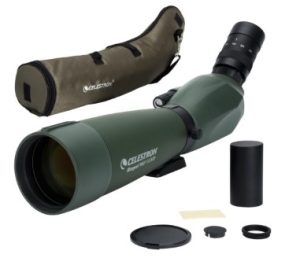
The Celestron Regal M2 20-60×80 brings decades of astronomical optics expertise to the precision shooting market, creating a spotting scope that delivers exceptional performance at an surprisingly reasonable price point. Celestron’s background in telescope manufacturing shows clearly in the Regal M2’s optical design and mechanical construction, resulting in a spotting scope that performs well above its price class for 300-yard applications.
The optical system utilizes Celestron’s proprietary XLT coating system, originally developed for astronomical telescopes, which provides exceptional light transmission and contrast. At 300 yards, this translates to bright, clear images with excellent color fidelity that makes bullet hole assessment both easier and more accurate. The 80mm objective lens provides substantial light-gathering capability that becomes particularly valuable during early morning or late evening shooting sessions.
One of the Regal M2’s standout features is its dual-speed focusing system, borrowed directly from Celestron’s astronomical telescope designs. This system provides both coarse focusing for rapid target acquisition and ultra-fine focusing for precise image adjustment – a combination that’s particularly valuable when trying to resolve small details at distance. The focusing mechanism operates smoothly and maintains its settings even during transport and repositioning.
The 20-60x magnification range covers the practical needs of 300-yard shooting excellently. The 20x low end provides comfortable target acquisition and general observation, while the 60x high end offers detailed shot analysis capability. What’s particularly impressive is how well the Regal M2 maintains image quality throughout this magnification range, with minimal degradation even at maximum power.
Build quality reflects Celestron’s commitment to creating instruments that can handle demanding field conditions. The spotting scope features full waterproof and fog-proof construction with nitrogen purging and precision sealing. The rotating tripod collar allows for easy positioning adjustments, while the dual-position eyepiece design accommodates both straight and angled viewing preferences.
Key Features
| Feature | Specification |
|---|---|
| Magnification | 20-60x |
| Objective Lens | 80mm |
| Field of View | 98-51 feet at 1000 yards |
| Close Focus | 23 feet |
| Eye Relief | 17-14mm |
| Weight | 68 oz |
| Length | 16.1 inches |
| Body Material | Aluminum alloy |
Pros
- Excellent optics derived from astronomy background
- Dual-speed focusing system for precision adjustment
- Large objective provides superior light gathering
- Versatile eyepiece positioning options
- Outstanding value for optical performance
- Robust construction suitable for field use
Cons
- Heavy weight requires substantial tripod support
The Celestron Regal M2 20-60×80 offers precision shooters the opportunity to benefit from decades of astronomical optics development. For shooters who prioritize optical performance and unique features like dual-speed focusing, the Regal M2 provides exceptional value. While it requires proper support due to its size, the optical advantages make it an excellent choice for serious 300-yard precision work.
Check Price on Amazon5) Vortex Diamondback HD 20-60×85 (Best Budget Option)
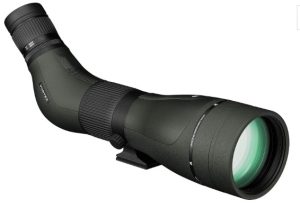
The Vortex Diamondback HD 20-60×85 proves that excellent optical performance doesn’t require premium pricing, delivering impressive clarity and features that make it accessible to budget-conscious shooters who still demand quality results at 300 yards. As Vortex’s entry-level spotting scope, the Diamondback HD incorporates many of the optical technologies found in their premium lines while maintaining pricing that won’t strain most shooting budgets.
The optical system features Vortex’s HD (High Density) glass elements and premium multi-coatings that deliver surprisingly good color accuracy and contrast for a spotting scope in this price range. At 300 yards, bullet holes appear clear and well-defined, with minimal chromatic aberration that could interfere with accurate shot assessment. The large 85mm objective lens provides excellent light-gathering capability that’s particularly noticeable during challenging lighting conditions.
What’s particularly impressive about the Diamondback HD is how well it performs at higher magnifications. Many budget spotting scopes become nearly unusable at maximum power due to atmospheric disturbance and optical limitations, but the Diamondback HD maintains reasonable image quality even at 60x magnification. This makes it genuinely useful for detailed shot analysis rather than just providing impressive magnification numbers.
The build quality reflects Vortex’s commitment to providing reliable performance across their entire product line. The spotting scope features complete waterproof and fog-proof construction with argon gas purging and O-ring sealing. While the mechanical components may not have the refined feel of premium spotting scopes, they operate smoothly and reliably for typical field use.
The helical-focus eyepiece design provides smooth focusing throughout the magnification range, and the rotating tripod collar allows for easy positioning adjustments. While not as sophisticated as dual-focus systems found on premium spotting scopes, the single focus control is intuitive and adequate for most 300-yard applications.
Key Features
| Feature | Specification |
|---|---|
| Magnification | 20-60x |
| Objective Lens | 85mm |
| Field of View | 105-57 feet at 1000 yards |
| Close Focus | 36 feet |
| Eye Relief | 18-15mm |
| Weight | 66 oz |
| Length | 17.5 inches |
| Body Material | Aluminum alloy |
Pros
- Excellent value for optical performance
- Large objective provides good light gathering
- Vortex VIP lifetime warranty
- Reliable waterproof/fog-proof construction
- Performs well across magnification range
- Accessible pricing for budget-conscious shooters
Cons
- Heavier than compact alternatives
The Vortex Diamondback HD 20-60×85 makes quality spotting scope performance accessible to shooters who might otherwise be priced out of the market. While it may not have all the refinements of premium spotting scopes, it delivers the optical clarity and reliability necessary for effective 300-yard shooting. Combined with Vortex’s excellent warranty support, it represents outstanding value for developing precision shooters and budget-conscious enthusiasts.
Check Price on AmazonFrequently Asked Questions About Choosing the Best Spotting Scope for 300 Yards
What magnification range is ideal for spotting at 300 yards?
For 300-yard applications, a magnification range of 15-45x or 20-60x provides excellent versatility. The lower end (15-20x) offers comfortable target acquisition and wide field of view, while the higher end (45-60x) provides sufficient magnification for detailed bullet hole analysis. Avoid extremely high magnifications as atmospheric disturbance becomes problematic, and image quality typically degrades beyond 60x in most field conditions.
How important is objective lens size for 300-yard spotting?
Objective lens size significantly impacts image brightness and detail resolution. For 300-yard work, a minimum of 50mm is recommended, with 65-80mm being ideal for extended use and challenging conditions. Larger objectives gather more light and provide better resolution, but they also increase weight and bulk. The sweet spot for most shooters is 65-80mm, which balances optical performance with practical portability.
Do I need an angled or straight spotting scope for 300-yard use?
Both configurations work well at 300 yards, but each has advantages. Straight spotting scopes are more intuitive for beginners and easier to aim quickly, while angled scopes are more comfortable for extended viewing sessions and work better with lower tripod positions. For 300-yard bench shooting, straight scopes are often preferred for their simplicity and quick target acquisition.
How do atmospheric conditions affect spotting scope performance at 300 yards?
At 300 yards, heat mirage, humidity, and air movement begin to significantly impact image quality. High-quality optics with superior coatings and glass quality cut through atmospheric disturbance better than budget alternatives. Early morning and late evening typically provide the best atmospheric conditions for spotting, while midday heat can make precise shot assessment challenging even with premium optics.
What tripod stability is required for effective 300-yard spotting?
A quality tripod is essential for effective spotting scope use at 300 yards. The tripod should be rated for at least twice the spotting scope’s weight and feature sturdy leg locks and a smooth pan/tilt head. Lightweight tripods may work for compact spotting scopes, but larger objectives require substantial support to minimize vibration and maintain steady images, especially at higher magnifications.
Can I use a spotting scope for both 300-yard shooting and other distances?
Yes, quality spotting scopes are versatile instruments. The magnification ranges recommended for 300 yards work well from 100 yards out to 600+ yards, though you may want lower magnifications for closer work and higher magnifications for extreme distances. The key is choosing a spotting scope with a practical magnification range rather than one optimized for only one specific distance.
Conclusion
Selecting the right spotting scope for 300-yard shooting represents a critical investment in your precision shooting development, as the immediate feedback provided by quality optics accelerates skill development and improves shooting consistency. At this intermediate distance, you’re working in a sweet spot where atmospheric conditions are manageable, bullet holes are clearly visible with appropriate magnification, and equipment demands remain reasonable for most shooters’ budgets and physical capabilities.
The Vortex Razor HD 11-33×50 stands as our top choice for its exceptional balance of optical performance, portability, and practical features that make it ideal for most 300-yard applications. Its compact design doesn’t compromise on optical quality, and the magnification range perfectly matches the requirements of intermediate-distance precision work. For shooters who value premium performance in a portable package, this spotting scope represents the ideal combination of capabilities.
For those prioritizing maximum optical performance over portability considerations, the Leupold SX-2 Alpine HD 20-60×80 delivers uncompromising image quality that excels during extended shooting sessions and challenging conditions. The large objective lens and premium glass system provide image brightness and detail resolution that become particularly valuable for serious precision work and load development activities.
Budget-conscious shooters will find excellent value in both the Athlon Cronus 15-45×65, which delivers premium features at competitive pricing, and the Vortex Diamondback HD 20-60×85, which makes quality spotting scope performance accessible without sacrificing essential capabilities. The Celestron Regal M2 offers unique features derived from astronomical optics that provide exceptional performance for shooters willing to explore alternatives to traditional sporting optics manufacturers.
Remember that the best spotting scope for 300 yards is ultimately the one that matches your specific shooting style, physical requirements, and budget constraints. Consider factors like typical shooting session length, transport requirements, atmospheric conditions you’ll encounter, and your long-term precision shooting goals. Regardless of which option you choose from our recommendations, you’ll have an optical instrument capable of providing the clear, detailed feedback necessary to improve your shooting skills and maximize your accuracy at this critical intermediate distance where many precision shooting fundamentals are developed and refined.