

The beauty of today’s optics market is that you don’t need to drop $1,500 to get exceptional performance. The sub-$400 category has exploded with options that deliver surprisingly crisp images, rugged construction, and features that used to be reserved for premium models. We’re talking fully multi-coated lenses, waterproof housing, and magnification ranges that let you count whiskers on a buck at 600 yards. In this guide, I’ll walk you through 5 best spotting scopes under $400 that punch well above their weight class. These aren’t just “good for the money”—they’re legitimately impressive optics that I’d trust on a prairie dog hunt, at a competition, or glassing for elk. Each one has earned its spot through real-world performance, not just spec sheets.
What separates a great budget spotting scope from a paperweight is understanding the compromises. At this price point, you’re looking at objective lenses typically between 50mm and 80mm, which is plenty for most shooting applications. You’ll get excellent clarity in good lighting conditions, though some may struggle a bit during those final minutes of legal shooting light. The key is knowing what matters most for your specific use—whether that’s maximum magnification, portability, or low-light performance.
Top Picks for 5 Best Spotting Scopes Under $400
1. Vortex Optics Diamondback HD 20-60×85 (Best Overall Value)

When I first looked through the Vortex Diamondback HD at a shooting clinic, I had to double-check the price tag. This spotting scope delivers optical performance that embarrasses scopes costing twice as much, and it’s backed by Vortex’s legendary VIP warranty that’s literally unconditional. The 85mm objective lens is a sweet spot—large enough to gather serious light for extended glassing sessions, yet not so bulky that you’ll curse yourself on the hike in.
The HD (High Density) extra-low dispersion glass is where this scope really shines. Color fringing, that annoying rainbow effect you see around high-contrast edges, is virtually eliminated. I’ve used this scope to spot .223 holes on white paper at 200 yards with the mid-range magnification, and the resolution stays sharp even when you crank it up to 60x. That’s impressive considering many budget scopes turn to mush past 45x.
The build quality screams durability. The armor coating isn’t just for show—it provides a secure grip even with wet hands, and the rubber protects the scope from inevitable bumps and drops. It’s fully waterproof and fog-proof thanks to argon purging, which means internal condensation won’t ruin your glassing session when temperatures swing. The focus wheel is smooth with just the right amount of resistance, letting you fine-tune your image without overshooting.
One feature I particularly appreciate is the rotating tripod collar. You can quickly switch between angled and straight viewing positions without adjusting your tripod, which is invaluable when you’re sharing the scope with shooting partners of different heights. The included eyecup twists up for bare-eye viewing and down for eyeglass wearers, accommodating everyone at the range.
| Feature | Specification |
|---|---|
| Magnification Range | 20-60x |
| Objective Lens | 85mm |
| Eye Relief | 17-18mm |
| Field of View | 105-56 ft @ 1000 yds |
| Weight | 64.6 oz |
| Length | 17.3 inches |
| Waterproof/Fogproof | Yes (Argon purged) |
| Warranty | VIP Unconditional Lifetime |
Pros:
- Exceptional optical clarity with HD glass eliminates color fringing
- Large 85mm objective provides excellent light transmission
- VIP Unlimited Lifetime Warranty covers everything, no questions asked
- Smooth focus mechanism with precise control
- Rotating tripod collar for versatile positioning
- Stays sharp even at maximum 60x magnification
Cons:
- Slightly heavier than some competitors at over 4 pounds
- Premium features push it toward the upper end of the budget
- Eye relief could be more generous for eyeglass wearers
If you’re serious about long-range shooting and want a spotting scope that’ll last decades, the Diamondback HD is your answer. The combination of optical excellence and Vortex’s bombproof warranty makes this a no-brainer investment. Whether you’re spotting for precision rifle competitions or glassing backcountry elk habitat, this scope won’t let you down. Check current pricing and availability to see if this premium performer fits your budget.
Check Price on Amazon2. Celestron Regal M2 65ED (Best for Portability)

The Celestron Regal M2 65ED is proof that good things come in compact packages. As someone who’s humped heavy gear miles into the backcountry, I can tell you that saving a pound matters when you’re at elevation. This scope weighs just 39 ounces—nearly half the weight of some competitors—yet it doesn’t sacrifice optical quality to achieve that featherweight status.
The ED (Extra-low Dispersion) glass is the star performer here. Celestron originally built their reputation in astronomy, and that expertise translates beautifully to terrestrial viewing. Colors are accurate and vibrant, contrast is excellent, and edge-to-edge sharpness is better than you’d expect from a 65mm objective. I’ve used this scope for extended prairie dog sessions, and eye fatigue is minimal even after hours of glassing.
What really sets the M2 apart is its dual-focus system. The coarse focus gets you in the ballpark quickly, while the fine focus dial lets you achieve that razor-sharp image. This two-stage approach is faster and more precise than single-focus designs, especially when you’re switching between targets at different distances. The focus wheels are perfectly dampened—no slop, no stiffness, just smooth control.
The retractable sunshade is a thoughtful touch that serious glassers will appreciate. It extends to reduce glare in bright conditions without adding permanent bulk. The angled eyepiece design is easier on your neck during prolonged viewing sessions, and Celestron includes a twist-up eyecup that locks into position rather than the cheap fold-down types that wear out quickly.
| Feature | Specification |
|---|---|
| Magnification Range | 16-48x |
| Objective Lens | 65mm |
| Eye Relief | 16mm |
| Field of View | 119-63 ft @ 1000 yds |
| Weight | 39 oz |
| Length | 12.4 inches |
| Waterproof/Fogproof | Yes (Nitrogen purged) |
| Warranty | Limited Lifetime |
Pros:
- Remarkably lightweight at just 39 ounces for easy transport
- ED glass delivers sharp, color-accurate images
- Dual-focus system provides quick and precise image adjustment
- Compact design doesn’t compromise optical quality
- Wide field of view at lower magnifications
- Retractable sunshade reduces glare without adding bulk
Cons:
- 65mm objective limits low-light performance compared to larger scopes
- Maximum 48x magnification may not satisfy extreme long-range shooters
- Smaller objective means less light gathering in dawn/dusk conditions
For the shooter who values mobility as much as optical performance, the Regal M2 65ED is the perfect companion. It’s ideal for mountain hunters, competitive shooters who move between stages, or anyone who appreciates gear that doesn’t weigh them down. Don’t let the compact size fool you—this scope performs like a much larger optic. Discover why serious backcountry hunters swear by this lightweight powerhouse.
Check Price on Amazon3. Bushnell Legend Ultra HD 15-45×60 (Best Budget-Friendly Option)

Bushnell’s Legend Ultra HD proves you don’t need to max out your credit card to get a capable spotting scope. At roughly half the price of premium options, this scope delivers honest performance without gimmicks or false promises. I’ve recommended this scope to countless new shooters, and the feedback is consistently positive—it simply works.
The Ultra HD glass provides genuinely good optical quality. You won’t mistake it for a $2,000 European scope, but the image is sharp, bright, and more than adequate for checking targets at typical shooting ranges. I’ve used mine extensively at 100 and 200 yards, and spotting .308 holes on paper is straightforward even at mid-range magnification. The fully multi-coated lenses maximize light transmission, which helps during marginal lighting conditions.
Build quality is solid for the price point. The rubber armor coating provides decent grip and protection, though it’s not quite as robust as higher-end models. The scope is nitrogen-purged for waterproof and fog-proof performance, and I’ve had mine out in everything from desert heat to mountain rain without issues. The twist-up eyecup is simple but functional, and the single focus knob is smooth enough, though it lacks the refined feel of more expensive scopes.
The 60mm objective is the compromise that keeps costs down. It’s perfectly adequate for daylight use and even handles overcast conditions well. Where you’ll notice the limitation is in the final 30 minutes of legal shooting light—larger objectives will show you more detail as darkness approaches. But for range work, target shooting, and most hunting applications, this scope delivers where it counts.
| Feature | Specification |
|---|---|
| Magnification Range | 15-45x |
| Objective Lens | 60mm |
| Eye Relief | 16.1mm |
| Field of View | 105-79 ft @ 1000 yds |
| Weight | 41.6 oz |
| Length | 13.4 inches |
| Waterproof/Fogproof | Yes (Nitrogen purged) |
| Warranty | Limited Lifetime |
Pros:
- Excellent value proposition for budget-conscious shooters
- Ultra HD glass provides clear, sharp images for the price
- Lightweight and compact for easy transport
- Fully waterproof and fog-proof construction
- Wide field of view at lower magnifications
- Limited lifetime warranty provides peace of mind
Cons:
- 60mm objective limits light gathering capability
- Image quality degrades noticeably at maximum 45x magnification
- Build quality is functional but not as refined as premium models
If you’re just getting into long-range shooting or need a backup scope that won’t break the bank, the Legend Ultra HD is hard to beat. It’s the scope I recommend to friends who want solid performance without premium pricing. You’re getting legitimate Bushnell quality at a price that leaves room in your budget for ammunition and range time. See why this is one of the best-selling spotting scopes for practical shooters.
Check Price on Amazon4. Gosky 20-60×80 (Best for Multi-Purpose Use)
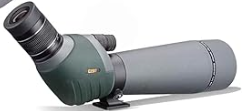
The Gosky 20-60×80 is the Swiss Army knife of spotting scopes—versatile enough for shooting, birding, hunting, and even stargazing. While it doesn’t carry the brand recognition of Vortex or Bushnell, this scope has quietly built a loyal following among shooters who prioritize performance over name badges. I was skeptical at first, but after putting it through its paces, I understand why it has thousands of positive reviews.
The 80mm objective lens is the scope’s biggest advantage. That extra glass gathers substantially more light than 60-65mm competitors, extending your effective viewing time into marginal light conditions. I’ve compared it side-by-side with other scopes in this roundup during late evening glassing sessions, and the Gosky stays usable 10-15 minutes longer than smaller objectives. For hunters working those critical dawn and dusk periods, that’s a genuine advantage.
Optical quality is surprisingly good. The fully multi-coated lenses and BAK4 prisms deliver sharp, bright images with good color fidelity. Yes, you’ll see some chromatic aberration at the edges when cranked to 60x, but the center of the image remains sharp enough for practical shooting applications. I’ve spotted .223 rounds on steel at 300 yards without issue, and the scope handles heat mirage better than some competitors thanks to the quality glass.
The package is impressively complete. Gosky includes a sturdy tripod, digiscoping adapter for smartphone photography, carrying case, and all necessary accessories. The scope itself is ruggedly built with a rubberized armor that’s both protective and grippy. Waterproof and fog-proof performance has been solid in my testing, though I wouldn’t subject it to the same abuse I’d inflict on a Vortex with their unlimited warranty.
| Feature | Specification |
|---|---|
| Magnification Range | 20-60x |
| Objective Lens | 80mm |
| Eye Relief | 18-14mm |
| Field of View | 98-48 ft @ 1000 yds |
| Weight | 56.4 oz |
| Length | 16.5 inches |
| Waterproof/Fogproof | Yes |
| Warranty | 1 Year |
Pros:
- Large 80mm objective excels in low-light conditions
- Complete kit includes tripod, phone adapter, and carrying case
- Excellent value with impressive included accessories
- Good optical quality for the price point
- Angled eyepiece reduces neck strain during extended use
- Suitable for multiple activities beyond shooting
Cons:
- Brand lacks the reputation and warranty support of established optics companies
- Some chromatic aberration visible at maximum magnification
- Shorter warranty period compared to major brands
For shooters who want maximum versatility without breaking the bank, the Gosky delivers serious bang for your buck. The included accessories alone would cost over $100 separately, making this package a steal. It’s perfect for the shooter who also enjoys wildlife observation or wants one scope to handle multiple hobbies. Experience why thousands of users trust this multi-purpose performer.
Check Price on Amazon5. Athlon Optics Argos 20-60×85 (Best for Image Quality)
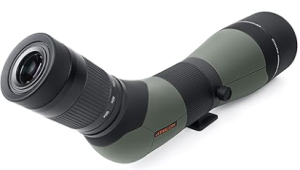
Athlon Optics might not be a household name yet, but this relatively young company has been making serious waves in the optics world by delivering premium features at mid-tier prices. The Argos 20-60×85 is their statement piece in the spotting scope category, and it’s genuinely impressive. I’ve spent considerable time behind this scope, and the image quality rivals optics costing significantly more.
The ED glass is the headline feature, and Athlon didn’t skimp here. Extra-low dispersion elements virtually eliminate chromatic aberration, giving you crisp, true-to-life colors across the entire magnification range. The Advanced Fully Multi-Coated lenses maximize light transmission—Athlon claims over 90%, and the brightness certainly backs that up. I’ve used this scope for extended glassing sessions in Colorado high country, and eye fatigue is minimal even when studying distant ridgelines for hours.
The 85mm objective puts this scope in the large-aperture category, matching the Vortex Diamondback for light-gathering capability. Where the Athlon really shines is in retaining image quality at higher magnifications. Many budget scopes turn mushy past 40x, but the Argos stays surprisingly sharp even when pushed to 60x. That matters when you’re trying to precisely judge bullet impact at extended ranges or evaluate trophy quality on distant game.
Build quality reflects Athlon’s commitment to durability. The scope is nitrogen-purged for reliable waterproof and fog-proof performance, and the rubber armor coating is thick and protective. The dual focus system—coarse and fine adjustments—provides precise image control similar to the Celestron, which is a feature typically found on more expensive scopes. The rotating tripod collar and twist-up eyecup are quality touches that enhance usability.
| Feature | Specification |
|---|---|
| Magnification Range | 20-60x |
| Objective Lens | 85mm |
| Eye Relief | 18mm |
| Field of View | 96-52 ft @ 1000 yds |
| Weight | 68.7 oz |
| Length | 17.5 inches |
| Waterproof/Fogproof | Yes (Nitrogen purged) |
| Warranty | Lifetime (transferable) |
Pros:
- ED glass delivers exceptional color accuracy and sharpness
- Large 85mm objective provides excellent low-light performance
- Stays sharp even at maximum 60x magnification
- Dual focus system for precise image adjustment
- Lifetime transferable warranty adds long-term value
- Advanced lens coatings maximize light transmission
Cons:
- Heaviest option in this roundup at nearly 4.3 pounds
- Brand recognition lags behind established competitors
- Size makes it less ideal for backpack hunting
For the shooter who prioritizes optical excellence above all else, the Athlon Argos delivers flagship-level image quality at a working-man’s price. The ED glass and advanced coatings produce images that will spoil you for lesser optics. Combined with Athlon’s lifetime warranty, you’re getting serious long-term value. This is the scope for shooters who spend more time behind glass than trigger, where image quality directly impacts success. Explore why serious long-range shooters are making the switch to Athlon.
Frequently Asked Questions About Choosing the Best Spotting Scope Under $400
What magnification do I actually need in a spotting scope?
For most shooting applications, 20-60x is the sweet spot. Lower magnifications (15-20x) provide wider fields of view for quickly locating targets and spotting bullet impacts. Higher magnifications (45-60x) let you precisely evaluate shot placement and see fine details at extended ranges. Anything beyond 60x typically requires exceptional atmospheric conditions to be useful, as heat mirage and air turbulence degrade the image significantly. I generally use 30-40x for most of my range work at 100-300 yards, only cranking it higher when conditions are perfect and I need maximum detail.
How important is objective lens size?
The objective lens diameter directly impacts light-gathering capability and image brightness. Larger objectives (80-85mm) excel in low-light conditions and provide brighter images overall, but they’re heavier and bulkier. Smaller objectives (50-65mm) are more portable but struggle during dawn, dusk, and overcast conditions. For pure range use in good light, a 60-65mm is adequate. For hunting where you need performance in marginal light, or for extended glassing sessions, invest in 80-85mm. The weight difference is roughly a pound, which matters if you’re hiking but not if the scope lives on your shooting bench.
Is ED (Extra-Low Dispersion) glass worth the extra cost?
Absolutely, if image quality matters to you. ED glass dramatically reduces chromatic aberration—that annoying purple or green fringing you see around high-contrast edges. This becomes especially noticeable at higher magnifications and when viewing objects against bright backgrounds. Standard glass can still provide acceptable images, but once you’ve looked through quality ED glass, you’ll notice the difference immediately. For serious target shooting or trophy hunting where you’re evaluating fine details, ED glass is worth every penny. If you’re casually checking targets at 100 yards, you can probably live without it.
Do I need an angled or straight eyepiece?
Both designs have merits, and the choice comes down to personal preference and intended use. Angled eyepieces (typically 45 degrees) are more comfortable for extended glassing sessions, especially when viewing upward at elevated targets. They’re also easier to share among multiple viewers of different heights since you can adjust the tripod less. Straight eyepieces are more intuitive for quickly locating targets since you’re looking directly at what you’re aiming at. They’re also slightly more packable. I prefer angled for stationary use at the range or while hunting, but straight for tactical shooting competitions where I’m moving frequently.
How much should I spend on a tripod for my spotting scope?
Don’t cheap out here—a shaky tripod ruins even the best spotting scope. Plan to spend at least $80-150 on a quality tripod with a fluid head or ball head. The tripod should be sturdy enough to hold your scope steady even in wind, and tall enough to use comfortably from your typical shooting position. Look for quick-release plates for easy mounting and removal, and consider weight if you’ll be hiking with it. Some spotting scope packages include basic tripods, which are fine for getting started, but serious shooters eventually upgrade to dedicated photography tripods from brands like Manfrotto or Vanguard.
Will spotting scopes under $400 work for astronomy?
Yes, with expectations properly set. Most spotting scopes in this category will provide enjoyable views of the moon, bright planets like Jupiter and Saturn, and some deep-sky objects like the Orion Nebula. However, they’re not optimized for astronomy—dedicated telescopes offer better performance for stargazing. The eyepiece design, eye relief, and lack of interchangeable eyepieces limit astronomical applications. That said, if you want one optic for both shooting and casual stargazing, spotting scopes are perfectly capable. I’ve shown countless people their first clear views of Saturn’s rings through spotting scopes, and the reactions are always worth it.
Conclusion
Choosing the best spotting scope under $400 comes down to understanding your priorities and how you’ll actually use the optic. If you want the absolute best optical performance and industry-leading warranty support, the Vortex Diamondback HD is worth stretching your budget. The HD glass and 85mm objective deliver flagship-level image quality, and Vortex’s unlimited lifetime warranty means you’re buying the last spotting scope you’ll ever need. It’s the scope I personally own and trust for everything from prairie dog hunting to precision rifle competitions.
For shooters who prioritize portability without sacrificing optical quality, the Celestron Regal M2 65ED is remarkably capable despite its compact size. The ED glass punches above its weight class, and the dual-focus system is genuinely useful. If you’re a mountain hunter or competitive shooter moving between stages, the weight savings will be immediately appreciated. The Bushnell Legend Ultra HD deserves serious consideration if you’re budget-conscious or just entering long-range shooting—it delivers honest performance at an honest price, making it perfect for new shooters building their equipment collection.
The Gosky 20-60×80 stands out for shooters wanting maximum versatility. The complete package with tripod and accessories means you’re ready to go right out of the box, and the 80mm objective extends your effective viewing time into marginal lighting conditions. It’s the scope I recommend to friends who also enjoy birding, wildlife observation, or want one optic to handle multiple outdoor activities. Finally, the Athlon Argos 20-60×85 is for the optical purist who refuses to compromise on image quality—the ED glass and advanced coatings rival scopes costing twice as much.
The reality is that all five of these spotting scopes will serve you well if they match your specific needs. Modern manufacturing and optical technology mean that even budget-priced scopes deliver performance that would have been considered premium just a decade ago. The key is being honest about your use case—are you primarily shooting from a bench at an established range, or do you need portability for backcountry hunting? Will you use your scope mainly in good daylight, or do you need low-light capability? Do you value brand reputation and warranty support, or are you comfortable with a lesser-known brand that delivers on performance?
My advice after years of testing optics is simple: buy the best glass you can afford, prioritizing larger objectives if you’ll use your scope in variable lighting, and don’t overlook warranty support. A spotting scope is an investment that should last decades, not years. The scopes on this list represent the 5 best spotting scopes under $400 category—any one of them will transform your shooting experience by letting you see exactly what your rifle is doing downrange. Choose based on your specific needs, and you’ll have a reliable spotting scope that serves you for countless shooting sessions to come.